
What a Boundary Line Survey Can Reveal on Older Lots
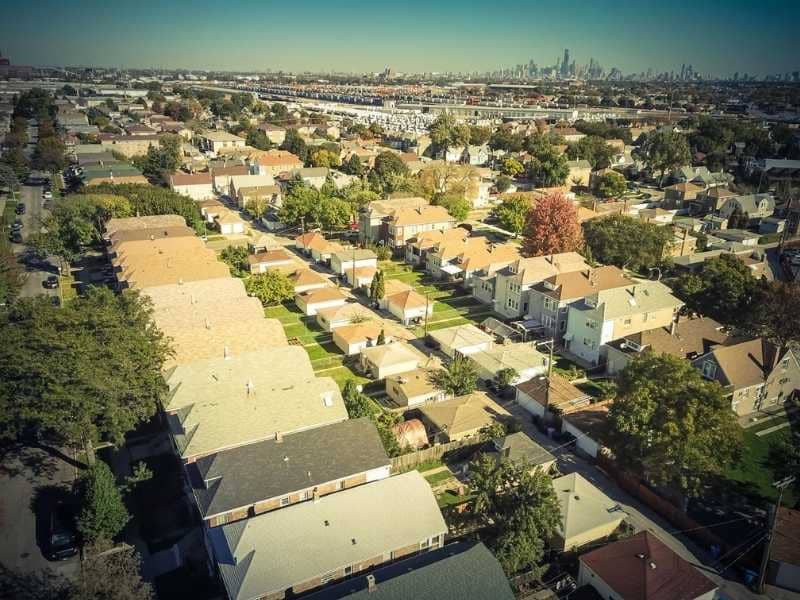
In Chicago, Illinois, many residential lots were laid out in the late 1800s and early 1900s. Most have changed hands many times since then. Each sale relied on old records to describe where the property lines were. But those records do not always match what is actually on the ground today. If you own or are buying one of these older lots, a boundary line survey can uncover things that title searches and county records simply cannot show you.
A typical Chicago lot is 25 feet wide and 125 feet deep. That was the standard set more than a century ago. The markers that once showed the corners of those lots, iron pins, rebar, and concrete posts, have been moved, buried, or lost over the years due to construction, landscaping, and utility work. What a surveyor finds on the ground today often does not match what the old plat map says.
Why Older Lots Have More Complicated Boundaries
When a neighborhood was first divided into lots, a surveyor placed physical markers at each corner. Those markers were the starting point for everything. Over the decades that followed, neighbors built fences based on where they thought the line was. Driveways were poured. Garages went up close to the lot edge. In many cases, the original markers were buried under concrete or taken out during road or alley work.
By the time a property sells today, there may be no original corner marker left at all. A surveyor has to piece the boundary back together using the recorded lot map, neighboring property records, any markers still found nearby, and physical clues in the field. This is not a simple tape measure job. It is a careful reading of layered records and real-world evidence. The result can surprise people. A lot that everyone treated as a certain size for 40 years may turn out to sit in a slightly different position than assumed.
What a Boundary Survey Finds That Records Cannot
When Lot Sizes Do Not Add Up
When Chicago’s early neighborhoods were mapped out, the measurements were not always exact. Small errors in one part of a block can add up over many lots. A surveyor checking an entire block may find that the recorded lot sizes do not add up to the total block width. Some lots end up a bit short. Others pick up a small strip. None of this shows up in any document. It only becomes clear when a licensed surveyor takes fresh measurements on the ground.
When Corner Markers Are Gone or in the Wrong Place
Property corners in Illinois are usually marked with iron pins or pipes, sometimes with a small cap showing the surveyor’s license number. On older Chicago streets, these pins are often buried, knocked out of position, or missing completely. A boundary survey looks for whatever markers remain, checks whether they match the recorded lot map, and sets new markers where the originals are gone or cannot be trusted. This gives the property a reliable corner reference going forward.
When Old Deed Descriptions No Longer Make Sense
Older property deeds in Chicago were sometimes written using landmarks that no longer exist. A description might say “to the old oak tree” or “along the creek,” and that landmark may have been gone for decades. Even deeds that use measurements and directions can contain copying errors from early recordings that shift the legal line to the wrong location. These errors pass from sale to sale unnoticed because title searches check documents, not the ground itself. A boundary survey is what catches them.
When Long-Term Use Does Not Match Legal Ownership
On older lots, it is common to find a fence, garage wall, or garden bed that has been sitting on or across the true property line for many years. Everyone may have assumed that was the line. But using land and legally owning it are two different things. In Illinois, a person who openly uses another person’s land without permission can, under certain conditions, make a legal claim to it. This is called adverse possession. That claim can arise after 20 years of continuous use, or as few as 7 years if the person had a deed and paid property taxes on the land. A boundary survey shows where these situations exist so they can be dealt with before they turn into legal problems.
What You Get From the Survey Drawing
After completing a boundary survey, a licensed Illinois surveyor is required by state law to produce a survey drawing. This is a permanent written record of what was found and where the boundaries were set. If corner markers are ever lost again, they can be replaced using that drawing. For owners of older Chicago lots, this document is especially useful because it shows where your boundary actually stands today, not where a map from 100 years ago said it would be.
Why Chicago’s History Makes This More Complicated
Much of Chicago was divided into lots in the early 1900s. Some blocks were later redrawn to make lots bigger or smaller. A lot that looks simple on the current tax map may have been carved out of an older division and recorded under a completely different map. When a surveyor looks into an older Chicago property, they may need to follow the lot through several sets of subdivision records just to find the correct legal description. That kind of research is part of what sets a boundary survey apart from a basic measurement.